You have no items in your shopping cart.


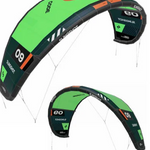
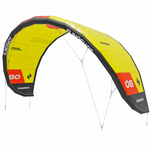
2026 AFS Stream Wing Foil Wing
$1,299.00
The science of flow, the feeling of flight ALL ROUND PERFORMANCE Lightweight, intuitive, high-performance: it allows for free, high-efficiency gliding while maintaining control. It allows you to fully concentrate on...
Thanks to its UPE (Ultra High Molecular Weight Polyethylene) construction.
Designed to adapt to all styles, the STREAM fades into the background when needed to let the rider focus on the purity of the sensations, but responds instantly when called upon.
The STREAM delivers progressive and perfectly modulated traction, which transforms into a smooth glide with excellent acceleration.
Structured fluidity and instinctive control with a direct connection thanks to the carbon boom.
A direct connection with the wing for ultra-precise control . The carbon boom facilitates weight transfers and improves responsiveness in freestyle or aggressive riding.
UPE woven, resistant Dacron, spinnaker with differentiated weights — the STREAM is designed to take a beating without faltering.
Thanks to its ultra-rigid UPE construction, the STREAM delivers instant, stable, and precise traction, even in strong winds. Combined with a lightweight PE ripstop canopy, it remains perfectly neutral while surfing and is virtually unnoticeable during transitions.
With the STREAM, gliding becomes fluid and instinctive.
Every detail is designed to match the dynamics of wind and water; its design connects you to the natural flows of gliding.
Materials:


Orders are usually processed and shipped the same day the order is placed. We do our best to get items out as quickly as possible, and are centrally located in Texas so most items will be 2-day shipping even with ground service. Domestic orders to the continental USA are shipped via UPS unless it is a small item. Small items are shipped via USPS. Most International orders are shipped via DHL express. Tracking numbers are available via this site in your account order page. if you want expedited shipping just choose it from the menu or call us at 281-508-6485 for any shipping problems or concerns.